Digital Waste Tracking, Defra
The Digital Waste Tracking is a transformation project to replace a largely paper-based system with a single digital record of waste movements, giving regulators the evidence to tackle waste crime and making compliance easier for legitimate operators.
I worked on the Digital Waste Tracking (DWT) service from February to November 2026 as the interaction designer in a multidisciplinary, agile team (user researchers, content designers, business analysts, developers and policy colleagues). Working to the GDS Service standards and taking the service from private to public beta.
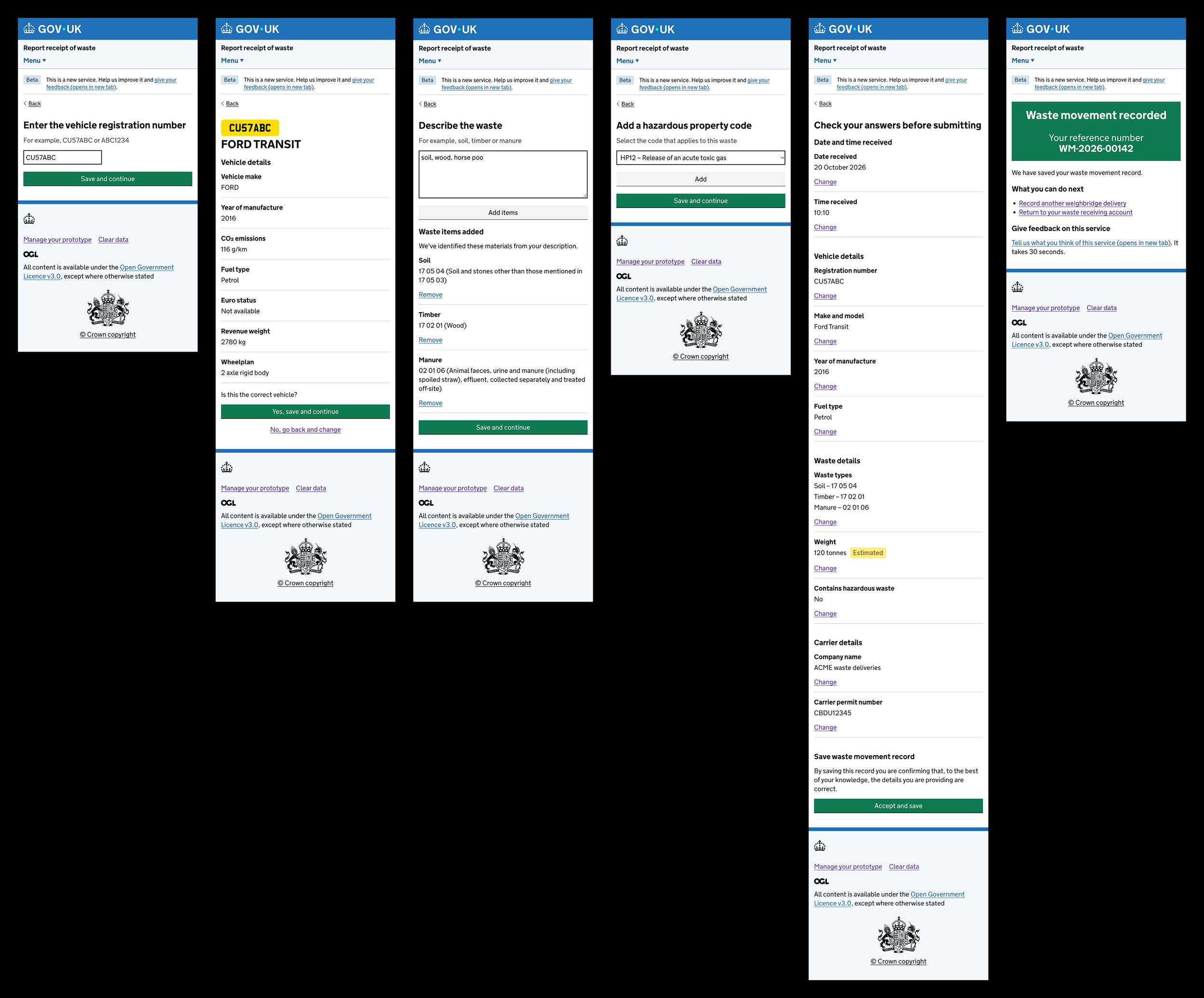
My initial focus was the waste receiver journey: designing a service that lets permitted sites record the waste they receive. This included a mobile-first proof of concept prototype for the weighbridge operators. These are users who are often working outdoors on the weighbridge, with HGVs queuing behind them. I designed for quick, repeatable entry: clear waste type and weight capture with units and estimates, branching for hazardous waste and its codes, and a check-your-answers page that makes the record easy to verify. We also trialled the ability to translate natural written language into specific waste codes with an AI “interpreter”, to alleviate the pain points around remembering long codes.
The service had to work for around 12,000 permitted sites with very different levels of digital capability. Early user research showed that manually creating detailed records through a GOV.UK-style service was burdensome, so I worked with researchers and the wider team to explore alternatives, including API-driven submission from users’ existing waste software and a temporary spreadsheet route for sites without it.
Waste crime damages the environment, blights communities and costs the UK economy an estimated £1 billion a year. Mandatory digital waste tracking is a cornerstone of the government’s Waste Crime Action Plan, replacing outdated record-keeping with a digital record that lets regulators check a load at the roadside and audit the waste chain when something goes wrong. The service became mandatory for waste receiving sites in England and Wales from October 2026, with Northern Ireland and Scotland following in January 2027.
“…one of the most significant regulatory changes in a generation.”
Environment Agency, 30 April 2026
Skills used
GOV.UK Prototype Kit
GOV.UK Design System
Nunjucks
User journey flows
Prototyping for mobile
Content design with GDS colleagues
Accessibility
Figma
Claude Code